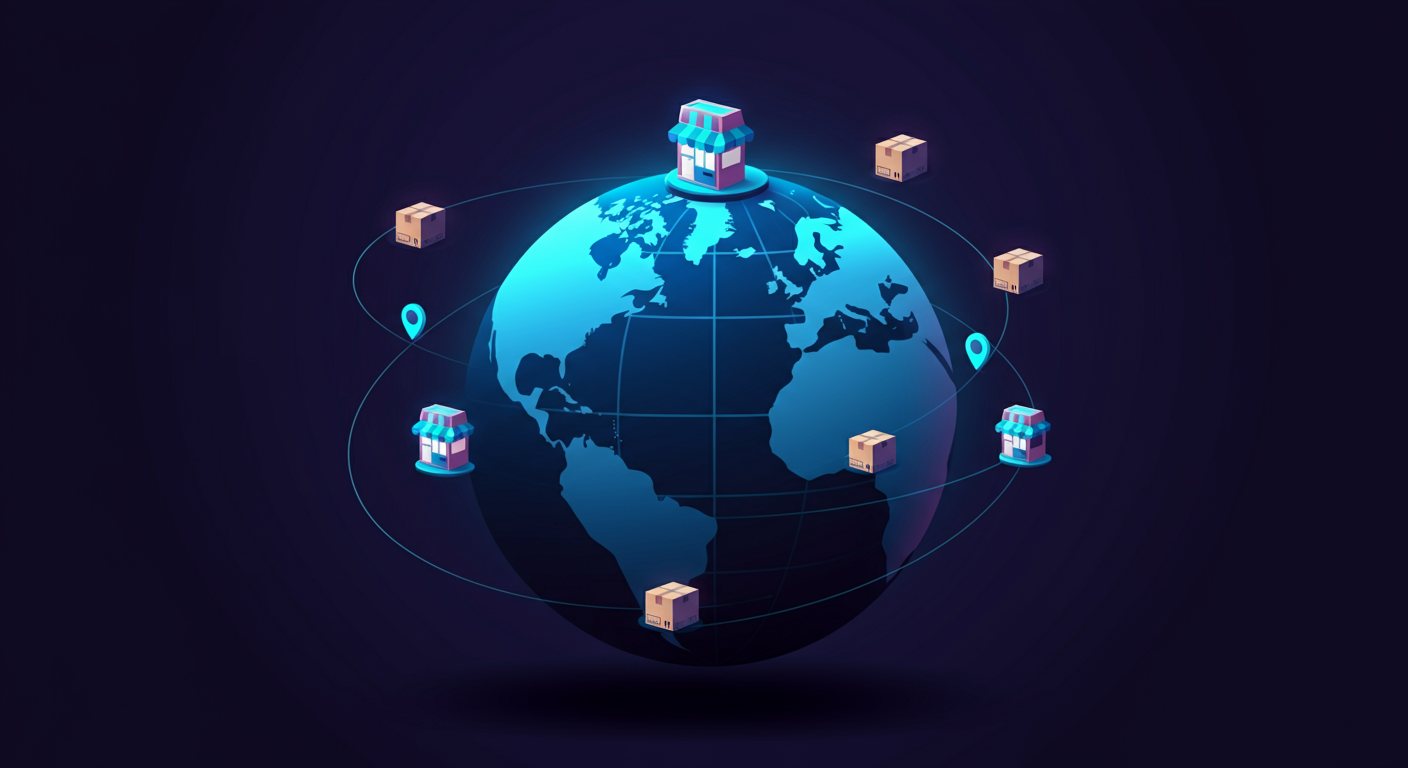
The bol.com marketplace is changing. What was once a predominantly Dutch and Belgian platform is now opening its doors to sellers from outside the EU. For established sellers, this shift brings both opportunity and a serious competitive challenge. More sellers mean more price pressure, faster fulfillment expectations, and a marketplace where only the most efficient operations survive.
If you’ve been selling on bol.com for years, you might feel the ground shifting beneath your feet. The question isn’t whether international competition will affect your business, it’s how prepared you are to respond.
What Non-EU Sellers Bring to the Table
International sellers, particularly those from manufacturing hubs in Asia, operate with fundamentally different cost structures. They often source products at lower prices, maintain razor-thin margins by design, and use sophisticated software to manage listings across dozens of marketplaces simultaneously.
This doesn’t mean they’re unbeatable. What they gain in cost efficiency, they often lack in local market knowledge, customer service quality, and fulfillment speed. A customer in Rotterdam still wants their order delivered tomorrow, not in two weeks. They want to reach support in Dutch, not navigate a chatbot that barely understands their question.
Your advantage as a local seller is real, but it only holds if you can match the operational efficiency that international competitors bring. And that’s where most Dutch sellers fall behind. Not because they lack quality products or market knowledge, but because they’re still running manual processes that eat into their time and margins.
The Margin Squeeze Is Already Happening
You’ve probably noticed it already. Products that used to sell comfortably at a healthy margin now face five or six competitors offering the same item at prices that seem impossibly low. Dynamic pricing strategies become essential when you’re competing against sellers who adjust their prices multiple times per day using automated tools.
The real danger isn’t a single competitor undercutting you. It’s the cumulative effect of many sellers gradually pushing prices down while customer expectations for speed and service keep going up. Every minute you spend manually processing orders, updating stock levels, or handling shipments is a minute you’re not spending on strategy, sourcing, or customer relationships.
Consider a typical scenario: you sell 50 orders per day. Each order takes roughly 3 minutes to process manually, from confirming the order to creating a shipping label and updating your inventory. That’s 150 minutes every day, nearly 2.5 hours, spent on tasks that software can handle in seconds. Over a month, you’re looking at 75 hours of repetitive work. What could you accomplish with that time instead?
Why Speed Matters More Than Ever
Bol.com’s algorithm rewards sellers who process orders quickly. Your delivery promise, fulfillment speed, and cancellation rate all factor into your seller score, which directly affects your visibility in search results and your chances of winning the buy box.
International sellers entering the platform know this. They come equipped with automation tools that process orders the moment they arrive, generate shipping labels instantly, and sync inventory across all their sales channels in real time. If you’re still manually copying order details into your shipping provider’s website, you’re starting the race a lap behind.
The Goede Keuze label and other trust signals that bol.com uses to highlight reliable sellers become harder to maintain when your processes can’t keep up with order volume. One missed shipment deadline or one stock-out that leads to a cancellation can drop your performance score for weeks.
Building an Automation-First Operation
Transitioning from manual to automated processes doesn’t require a complete overhaul of your business overnight. It starts with identifying the tasks that consume the most time and carry the highest risk of human error.
Order processing is the obvious starting point. When an order comes in on bol.com, your system should automatically confirm it, generate a shipping label with your preferred carrier, and send the tracking information back to bol.com. No clicking through interfaces, no copy-pasting addresses, no forgetting to update the status. This single automation can save hours every week and dramatically reduce your error rate.
Inventory synchronization is the second critical piece. If you sell on multiple channels, whether that’s bol.com, your own Shopify store, or other marketplaces, keeping stock levels accurate across all of them manually is a recipe for overselling. An automated sync ensures that when you sell your last unit on bol.com, your Shopify store reflects that change within minutes, not hours. For a deeper look at how this works, check out our guide on inventory synchronization.
The third layer is reporting and analytics. Automated systems don’t just do the work faster, they generate data you can use to make better decisions. Which products are trending? Where are your margins healthiest? Which carriers deliver on time most consistently? These insights are hard to extract from manual processes but come naturally from automated workflows.
The Human Advantage You Should Double Down On
Automation isn’t about replacing everything you do. It’s about freeing you to focus on what international competitors genuinely can’t replicate. Your understanding of the Dutch market, your ability to provide excellent customer service in the local language, your relationships with local suppliers, these are moats that no algorithm can bridge.
Think about it this way: if automation handles your order processing, inventory, and shipping, you suddenly have hours every week to invest in improving your product listings, responding personally to customer questions, negotiating better deals with suppliers, or expanding into new product categories.
The sellers who thrive in this new competitive landscape won’t be the ones who work harder. They’ll be the ones who work smarter, letting technology handle the repetitive tasks while they focus on strategy and customer experience.
Preparing for What’s Next
The opening of bol.com to international sellers isn’t a one-time event. It’s the beginning of a trend that will accelerate. More sellers will join, competition will intensify, and the platform will continue raising the bar for performance metrics.
Starting your automation journey now gives you a head start. You’ll have refined your processes, identified the tools that work best for your operation, and built the muscle memory of running an efficient, automated business before the real wave of competition arrives.
Schakel was built exactly for this moment. It connects your Shopify store with bol.com, automating order processing, inventory synchronization, and shipment handling so you can focus on growing your business instead of managing spreadsheets. Whether you’re processing 10 orders a day or 500, automation scales with you.
Try Schakel free for 30 days and see how much time you can reclaim. The competition isn’t waiting, and neither should you.
Want this handled automatically? Pick your connector.
Back to the blog